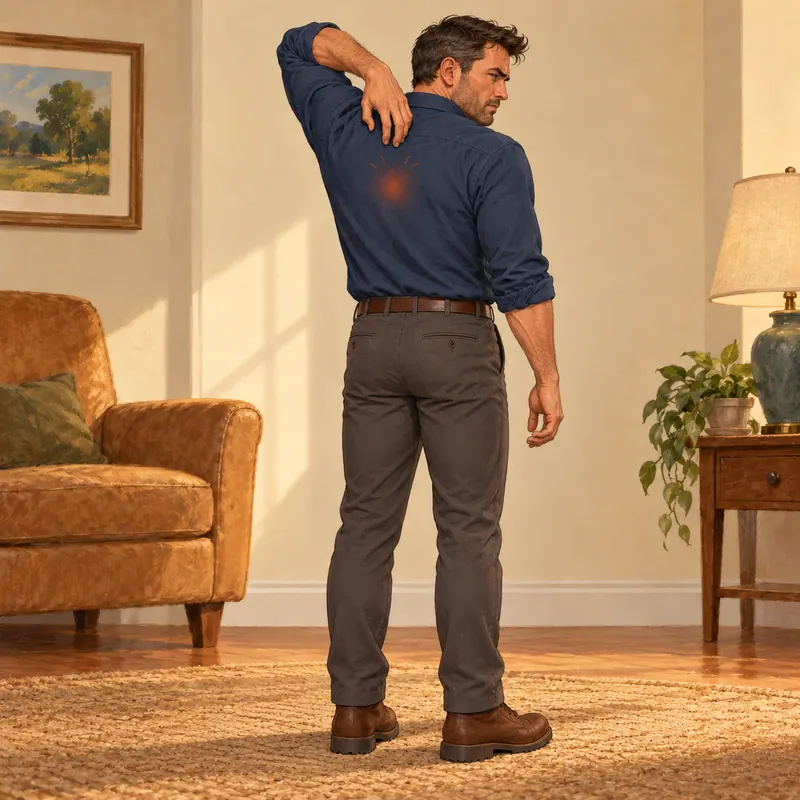
When you feel the pull, it feels like one thing. A single, heavy want.
It is two things wearing one coat.
Pulling them apart is one of the most useful things you can do.
The itch
The first is physical. Your brain got used to a certain level of stimulation, and when that stops coming, it notices.
That shows up as restlessness. A vague unease. Trouble settling. Sometimes irritability or poor sleep. A low hum that says something is missing. Covenant Eyes has a plain-English list of the ten most common withdrawal symptoms if you want to know what is normal.
Here is the good news about the itch: it is small. It is not agony. For most men it is closer to the low-grade discomfort of quitting caffeine. And like that, it fades. The research summarized in How Long Does It Take to Recover From Porn Addiction? puts the acute withdrawal window at roughly two to eight weeks.
If the itch were the whole problem, quitting would be easy.
The lie
The second thing is a belief. It is the voice that interprets the itch.
The itch says something feels off. The lie says and porn is what will fix it.
The lie says porn helps you relax. It says porn is how you cope. It says you deserve it after the week you have had. It says life without it will be a little grayer, a little harder, a little less yours.
The itch is a feeling. The lie is a story about the feeling. And the story is what sends you back.
Russell Willingham makes this the center of Breaking Free: sexual addiction runs on false beliefs, and the behavior is downstream of them.
Why the lie outlasts the itch
Men who quit by willpower often report something strange. Months after the physical restlessness is gone, they still want it. Out of nowhere. On a good day.
That is the lie, still standing after the itch has left. Nobody ever took it apart, so it waits. The first hard day or slow evening, it speaks up again.
This is why so many men feel like they never really got free. They outlasted the itch but kept the belief.
Dealing with the right one
You do not need to fight the itch. Let it be what it is: a passing discomfort that means your brain is resetting. Feel it. Name it. Let it go by.
The lie is where your attention belongs.
Next time the pull comes, separate the two. Ask yourself:
What am I actually feeling? Bored, tired, stressed, lonely, restless. Name it plainly. If you struggle to name feelings, an app like How We Feel can help you build the habit.
What is the story telling me porn will do about it?
Is that true? Not what you have been told. What actually happened last time. Did it fix the loneliness? Did you feel rested afterward? Or did you feel the same thing you felt before, plus a little worse?
Answer that truthfully a few times and the lie starts to sound thin.
Jesus said it directly: You will know the truth, and the truth will set you free (John 8:32). Not willpower. Truth. The itch dies on its own. The lie has to be seen through. Once it is, there is nothing left holding you.
When the flatness lingers
Some men find that after the itch fades, things feel flat for a while. Less joy in ordinary things. That has a name, anhedonia, and the Cleveland Clinic has a clear explainer. It is real, it passes, and it is not evidence that porn was giving you something good. It is evidence of how hard your brain was being pushed.
Keep reading
- Why Willpower Keeps Failing You
- You Are Not Weak. The Trap Is Good.
- Visual Whispers: Managing Intrusive Images in Christian Recovery
Sources
- The Easy Peasy Way to Quit Pornography
- Breaking Free, Russell Willingham
- 10 Symptoms of Porn Addiction Withdrawal, Covenant Eyes
- How Long Does It Take to Recover From Porn Addiction?
- John 8:32